
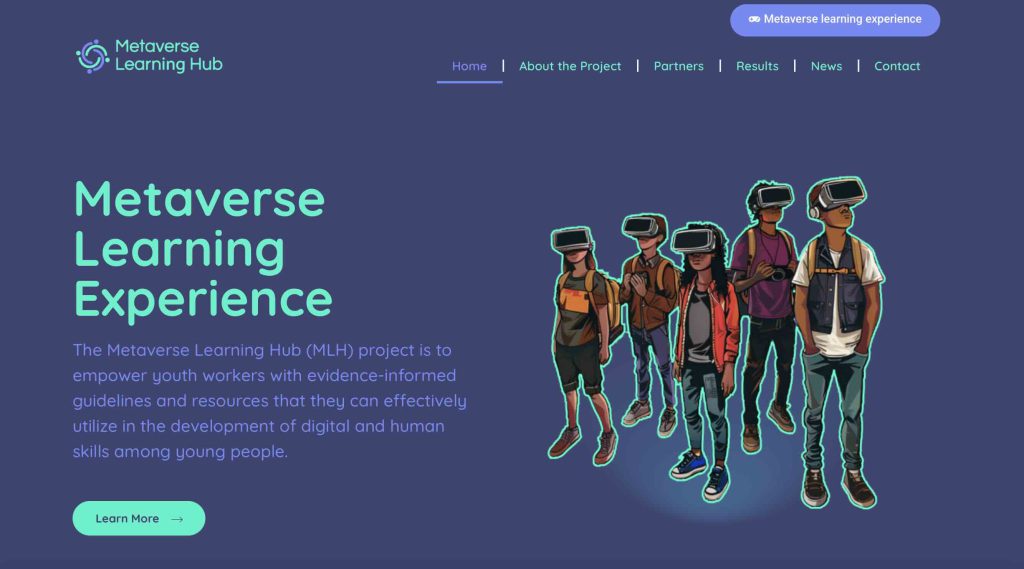
Civil society organizations are increasingly exploring new digital tools to strengthen collaboration, youth engagement, and international cooperation. One of the most innovative moments of the project was the MEATVERSE multiplier session, where representatives from civil society organizations gathered to experience and test the MEATVERSE platform — a virtual metaverse environment designed to support interactive learning and cross-border collaboration.
More than 30 representatives from civil society organizations and youth initiatives from over 15 countries joined the session. Participants came from organizations across Europe and neighboring regions, including Romania, Croatia, Slovakia, Germany, Poland, Greece, North Macedonia, Serbia, Albania, Ukraine, Sweden, Georgia, the Netherlands, Lebanon, Egypt, and Morocco. This diverse group created a vibrant space for exploring how immersive digital environments can support the work of civil society.
Entering the Metaverse
During the session, participants were introduced to the MEATVERSE application and its virtual hub. Instead of a traditional online meeting or webinar, participants entered a shared digital environment where they could move through the virtual space using avatars, interact with other participants, and explore interactive elements embedded in the platform.
The MEATVERSE hub was designed to simulate a collaborative digital environment where organizations can meet, host workshops, exchange ideas, and engage in interactive activities. Participants navigated through the space, discovered different areas of the virtual environment, and experienced how immersive technology can transform the way organizations connect and learn together.
For many participants, this was their first experience interacting within a metaverse environment. The session therefore combined explanation, demonstration, and hands-on exploration, allowing participants to gradually familiarize themselves with the technology.
Hands-on Testing
A key element of the multiplier session was the opportunity for participants to actively test the platform. Instead of only observing the technology, civil society representatives were invited to explore the virtual hub themselves and interact with other participants in real time.
Participants experimented with movement inside the digital environment, avatar-based interaction, and collaborative activities integrated into the platform. These activities were designed to demonstrate how immersive environments can support training sessions, networking, youth consultations, and collaborative discussions.
The interactive nature of the metaverse environment encouraged informal exchanges between organizations and created a dynamic learning experience that differs significantly from traditional online meetings.