
PWR Up 2025: Igniting Connections and Strengthening Capacity
About the Event
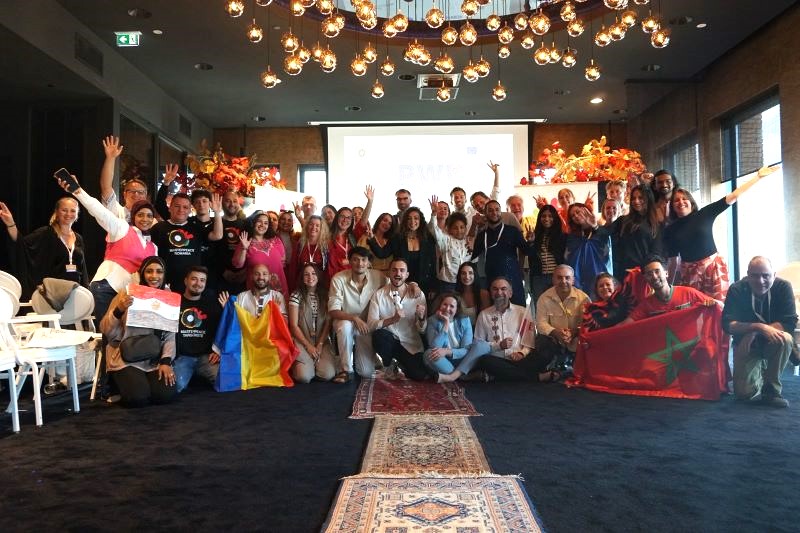
PWR Up 2025 transformed the Van der Valk Hotel in Utrecht into a vibrant meeting place filled with conversation, creativity, and shared purpose. Over two days, 63 participants from more than 30 civil society organizations and over 20 countries gathered to explore new tools, strengthen collaborations, and reconnect with the human side of changemaking. This edition centered around two guiding themes—PWR in Practice: Tools & Action and PWR of People: Connections & Foundations—which together created a space for both practical learning and deep reflection.
Overall Impact and Atmosphere
Participants consistently described the event as energizing and grounding at the same time. Many noted that they arrived feeling busy and tired from everyday project work but left with renewed clarity, practical ideas, and a stronger sense of belonging to a global community of changemakers.
Core Values:
- Connect : Build meaningful relationships across communities.
- Learn : Share tools, experiences, and solutions.
- Amplify : Elevate each other’s voices and drive collective change.
Day 1: Tools, Action, and Hands-On Learning
Opening the Summit
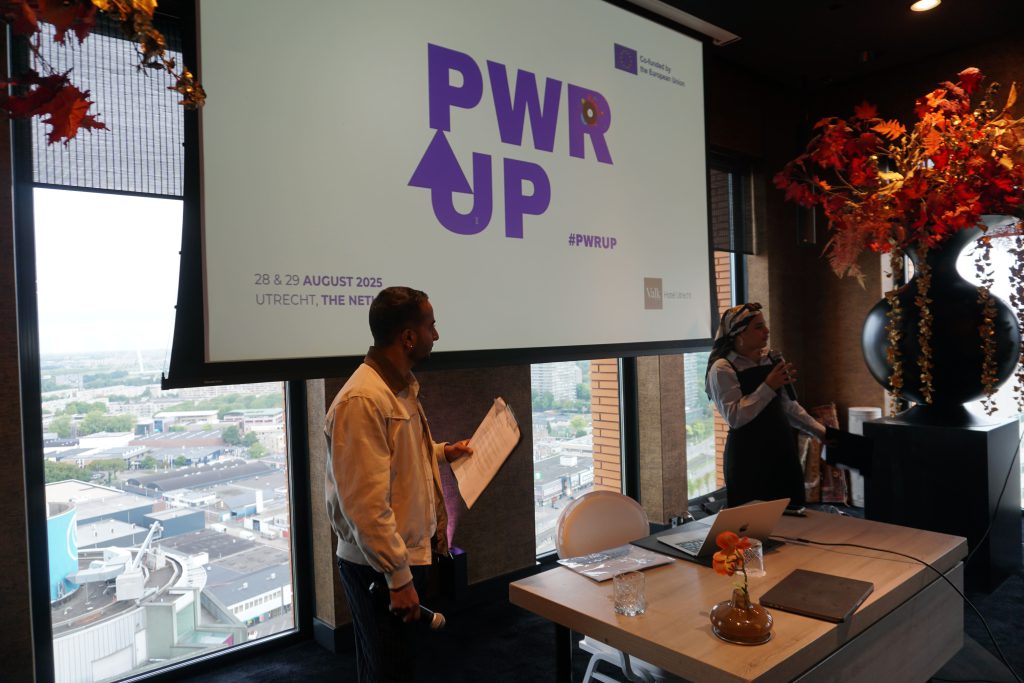
The summit opened with a warm welcome from Ashwini and Maryam, followed by a welcoming speech from MasterPeace co-leaders Raghda Elhalawany and Lucija Popovska, setting an atmosphere that was open, friendly, and energizing. The first session of the summit was led by Raghda Elhalawany, who reflected on the state of civil society today. Drawing on Global Growth Insights (2025), she shared how NGOs have expanded globally over the last decade and highlighted the growing challenges and opportunities brought by digital transformation. Raghda’s message was mostly grounded and honest, inviting participants to think about where the sector stands and where it must go next. Most attendees reflected afterward that this session helped them take a step away from their daily project work and reconnect with the bigger purpose of their organizations.
Eco-Labelling and Sustainability in Practice
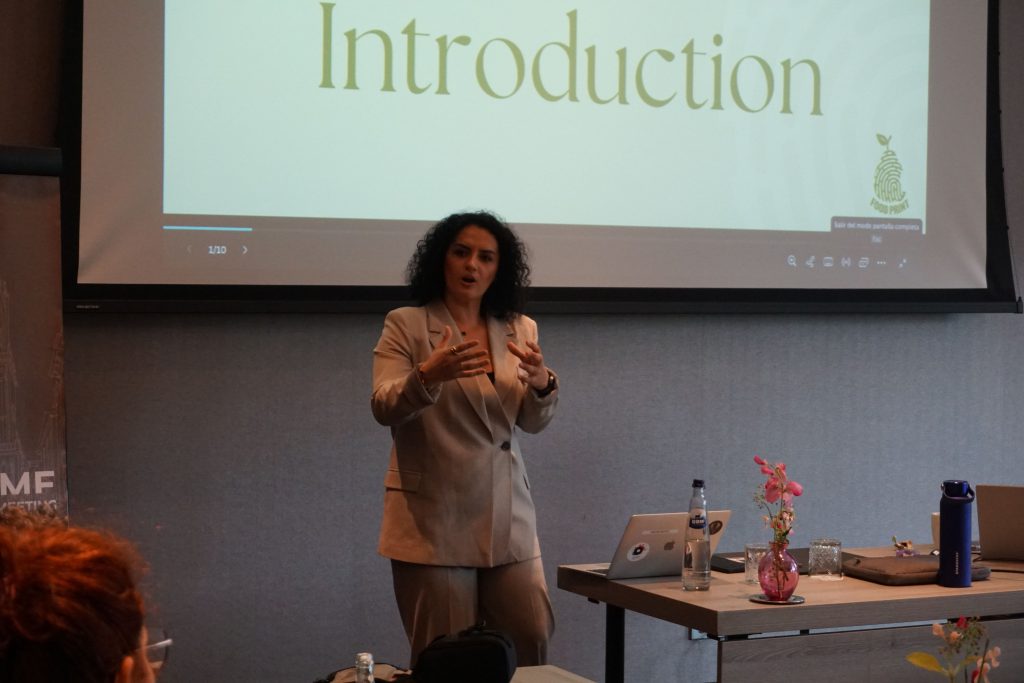
The morning continued with a set of parallel sessions that immersed participants in practical tools and real-world examples. Ardita and the rest of the GrowUnited team presented their eco-labelling tool, developed under the FOODPrint project. Inspired by Doughnut Economics, the tool sparked lively discussions about food choices, sustainability, and the role communities can play in shaping greener systems and influencing sustainable choices and consumption. Ardita showcased how a simple A–E label based on Doughnut Economics can help people choose more sustainable food. The label looks at planetary health, human wellbeing, and animal welfare, with a QR code for more info.
Later, she also mentioned that her favorite moment was when someone shared that this system could help young people finally see sustainability in everyday choices and not just as theory, but in real life. For her, that showed how change happens when complex ideas become practical and easy to use.Participants of the session mentioned that it helped them see how tools such as these can promote sustainability goals and be translated into simple, actionable choices in schools, youth groups, and local communities.
Social Entrepreneurship: Business with Purpose
At the same time, Bob Kaminski, Hamza, and Maryam led a session on social entrepreneurship. Rather than focusing on theory, they introduced it as a mindset, a way to address social challenges through purpose-driven business models. Their stories, including examples such as Grameen Bank and the Amal Women’s Training Center in Marrakech, grounded the discussion in real-life impact and encouraged participants to reflect on the issues and solutions present in their own communities. Many participants shared that this session shifted how they think about “projects,” encouraging them to design initiatives that are both socially impactful and financially resilient.
Designing Learning Better: Introduction to the ADDIE Model
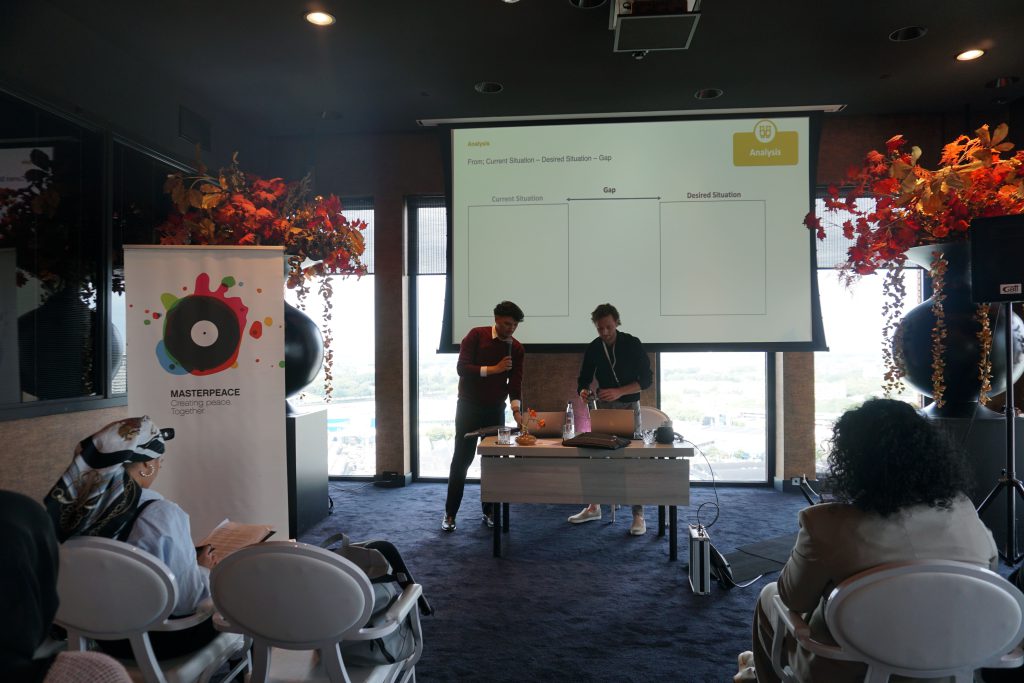
Another session, led by Bram Verstraten and Saugat Jung Pandey, introduced the ADDIE learning design model. They focused on the importance of the Analysis phase and invited participants to reflect on how learning is designed within their organizations, what works, what does not, and how they can strengthen capacity-building processes. Participants noted that this gave them a clearer structure for designing training and that they felt more confident in evaluating whether their learning activities actually create change.
Exploring the Future of Learning: The Metaverse Hub
Later, participants explored The Metaverse Learning Hub with Hamza Bouksim. The session offered a playful introduction to immersive virtual learning environments and opened conversations about the future of digital youth engagement. Many attendees expressed curiosity and excitement about using such tools to reach young people who are otherwise difficult to engage through conventional workshops or classrooms.
Project Collaboration and Peer Learning
In the afternoon, parallel sessions were conducted by project teams from FOODPrint, DOUth & Halan We Grow. Along with the project-related meetings, a parallel session on the concept of Mosaic of Minds (MoM) was also conducted. The discussion surrounding MoM, guided by MasterPeace co-leader Lucija Popovska and Joan Muilwijk, closed with a case study from MasterPeace Georgia, offering concrete lessons from field experiences at home. Giorgi from MasterPeace Georgia focused on Social Media Marketing for Impact, and how it connects civil society work with CSR and ESG agendas. He discussed how storytelling, data-based content, and steady engagement online can grow visibility and support. He also shared that the session encouraged participants to rethink social media as more than posting, seeing it as a tool for partnerships, collaboration, and real systems change. Later, the participants shared that these exchanges helped them realize that their challenges are often shared across countries, and that practical peer advice can be as valuable as formal training.
Ethical and Inclusive AI: Opportunities and Risks
A thought-provoking session on ethical and inclusive AI followed, led by Akash Raj and Maria Bader. They discussed the biases embedded in generative AI, the phenomenon of AI hallucinations, and the disproportionate impact irresponsible AI can have on marginalized communities. Their reflections encouraged organizations to adopt more transparent, critical, and ethical approaches to AI. Several participants mentioned that this session helped them feel more prepared to start organizational conversations around AI rather than avoiding the topic out of uncertainty. Many also expressed that they no longer felt intimidated by AI debates and felt better prepared to discuss responsible use of technology, especially in relation to vulnerable groups.
Celebrating Peace and Shared Humanity
The day ended on a powerful emotional note with the International Day of Peace celebration. Participants shared peace messages in their own languages and walked together in a symbolic peace procession, creating a moment of unity that resonated deeply across the room. Many described this as a grounding experience, reminding them why they chose to work in peacebuilding and social change in the first place. For several, this moment became the personal highlight of the summit.
Day 2: People, Strategy, and Collective Vision
Opening the Day: Building Trust and Presence
The second day opened with Ditta Dolejsiova gathering participants in a circle. Her invitation to trust, presence, and openness immediately grounded the group. It was a reminder that relationships, not tools, are the foundation of all meaningful change. Participants shared afterward that this simple exercise helped them feel seen as people rather than just “representatives of organizations,” which created a supportive atmosphere for the rest of the day.
Rethinking the Future: Doughnut Economics and Youth Perspectives
The morning continued with a reflective session by Marleen Boersen, who guided participants through the Module of the Future and Doughnut Economics. She blended global data with perspectives from young people on climate anxiety, hope, and the future of the planet. Her message was both urgent and empowering, challenging participants to rethink sustainability through a balance between people and the planet. Participants reflected that the session helped them better understand how to talk about climate issues with youth in ways that acknowledge fear but still build agency and optimism.
Artivism for Critical Consciousness and Social Change
This was followed by an emotionally resonant session of the PWR Up event. Led by Dona Momm, the session explored artivism, the blend of art and activism, as a tool to strengthen critical consciousness and inspire social change. Participants visited the SDG gallery, created artwork, exchanged personal stories, and reflected on powerful images such as Banksy’s “Soldier and Girl” mural from Bethlehem. Many participants shared that expressing ideas through art allowed conversations that felt too heavy or complex to emerge in words alone, making this session both healing and motivating.
Powering Youth Participation: Strategy and Inclusion
Ditta returned later in the day with a session focused on youth strategy. She examined who young people are, where they are often overlooked, and how organizations can better serve them. She highlighted the situations of marginalized youth, including foster youth, Roma youth, LGBTQIA+ youth, rural youth, young women, and young adults with disabilities, and emphasized the need for both youth-driven and youth-service models. Her reflections called for intergenerational leadership and more inclusive, intentional youth engagement. Several participants shared that they would revisit their existing youth programs with a stronger focus on inclusion, accessibility, and representation.
Sustainable Organizations: Fundraising Strategy and Diversification
In the afternoon, Jennifer Lemke delivered a practical session on fundraising strategy and diversification. She outlined clear approaches for corporate, individual, and private fundraising and emphasized the importance of setting SMART goals to ensure long-term financial sustainability. Her down-to-earth style made the topic accessible and highly actionable. Participants commented that they left the room with concrete steps they could apply immediately, rather than abstract high-level fundraising theory, increasing their confidence in resource mobilization.
Open Networking and Matchmaking: From Ideas to Collaboration
The summit concluded with an interactive session called “Networking with a Passion.” Instead of a usual formal networking round, participants were invited to write down topics they truly care about, ideas they were passionate to discuss, questions they were curious about, or themes they wished to explore with others. These topics were then posted visibly around the room, turning the space into a colorful wall of ideas.
Afterwards, a matchmaking process began. Participants walked around, read the posted topics, and joined the ones that spoke to them. This created natural groups of people who shared similar interests. Small discussion circles of about three to six people formed around each topic, making the conversations comfortable, focused, and lively.
The proposed topics reflected the diversity of the group and the spirit of the summit. Some of the themes included “youth education dialogue,” “project ideas and joint fundraising,” “centering wellbeing in our economies and organizations,” “the needs of young people,” “public speaking,” “graffiti,” “how to be great at sales,” “social entrepreneurship for everyone,” “AI and digital CO₂ emissions,” “innovation,” and “how to generate new ideas.” Each group took time to share experiences, exchange practical tips, and explore possible next steps together.
This open format created space for organic connection, genuine idea-sharing, and the emergence of new collaborations. It felt less like a formal session and more like a community coming alive around shared passions. Many participants commented that this innovative style of matchmaking and networking was not only fun, but also very effective and everyone liked it and felt included.
The two-day gathering ended with a lively dinner filled with laughter, stories, and a renewed sense of community. Several new partnerships and project ideas were informally initiated during these conversations, showing how networking spaces like this can directly grow into future action and real-world collaboration.
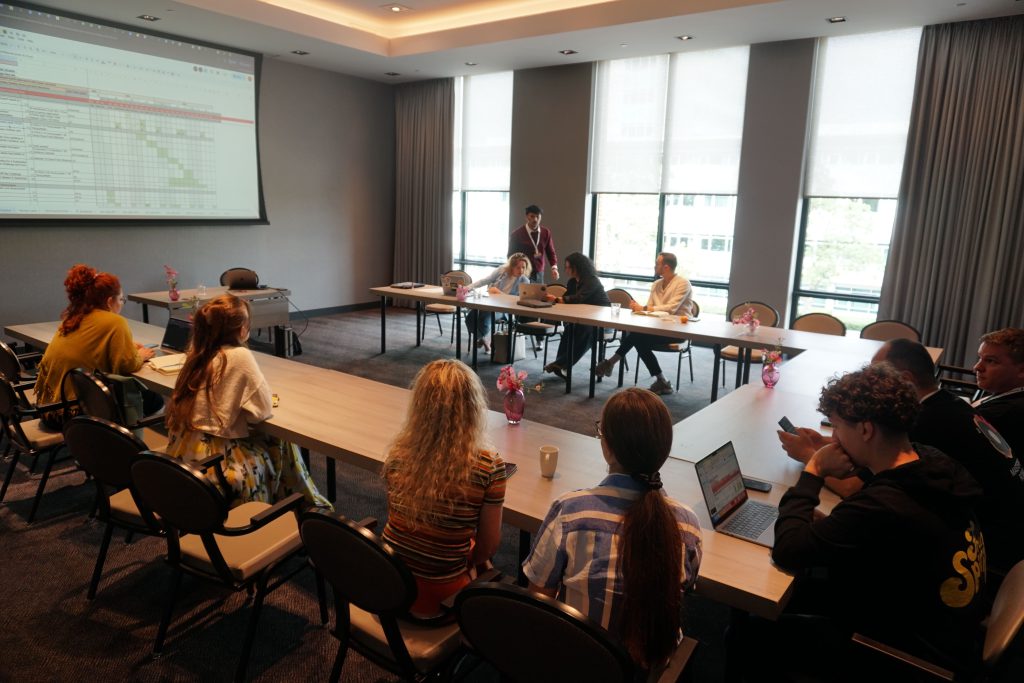
A Celebration of Connection and Collective Power
PWR Up 2025 was more than a professional gathering. It was a celebration of solidarity, creativity, youth empowerment, and the collective capacity of civil society. Over two days, participants exchanged methods, stories, and visions, built trust, and amplified each other’s voices. With representation from more than 20 countries, the summit showed what becomes possible when people unite with purpose.
Looking Ahead and Why PWR Up Matters Beyond 2025
PWR Up 2025 was not just a moment; it was an investment in future cooperation and collective capacity. Participants left with:
- Practical tools they plan to apply in their communities
- Renewed motivation to work through complex challenges
- Stronger cross-country networks for ongoing collaboration
The event demonstrated that sustainable change grows from sustained relationships, shared learning, and safe spaces for reflection. As participants return home, the lessons from Utrecht continue through projects, partnerships, and the everyday decisions of organizations working toward peace, inclusion, and sustainability. Beyond the event itself, the impact continues. Many participants shared plans to adapt the tools, methods, and ideas from PWR Up within their own communities, from youth engagement strategies to new fundraising approaches and learning designs. The summit strengthened a network that will keep collaborating long after Utrecht, reminding us that meaningful change grows through relationships, shared learning, and sustained practice.